

A Dealer’s Guide to Financing Older Inventory
By Jared Zimlin, Business Development Director, Elite Recreational Finance, an MRAA Education Champion
As part of the MRAA’s partner contributed education series, this article offers a practical guide to financing aged inventory, protecting margins and turning older units into revenue.
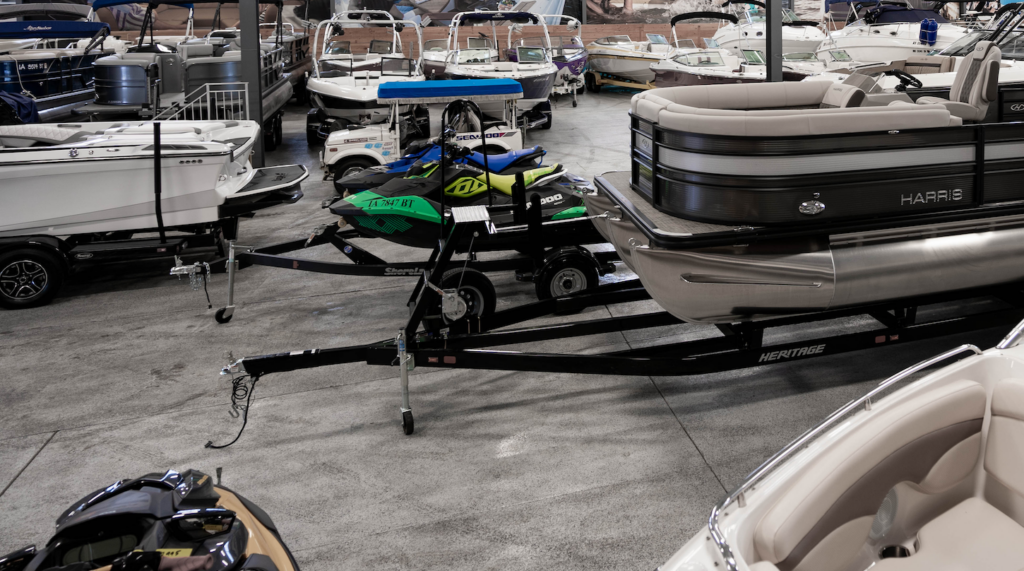
Every marine dealer knows the feeling. A unit that arrived in late spring sat through the summer, missed its window and is now staring back at you from the lot in October. The model year has turned. The lender you counted on is calling it “used.” And now the customer who wants it is running into walls at the F&I desk.
This isn’t a failure of the sales process — it’s a financing challenge. And like most financing challenges, it’s solvable if you know the mechanics.
Here’s a practical breakdown of how to protect margin and move aged inventory by understanding how lenders classify units, how to use J.D. Power, the Boat Used Calculator (BUC Book) and comparables correctly, and how to build a down payment and pricing strategy that keeps deals alive.
How Lenders Define ‘Used’ and Why It Matters More Than You Think
The most important thing to understand is that lender classification of new vs. used is not based on whether the boat has been in the water. It’s based on age and model year conventions that vary — sometimes significantly — by lender.
The marine lending industry generally follows one of two frameworks:
• Model Year Triggers
Most lenders classify a unit as used once it is no longer the current or prior model year. Some lenders extend grace to two prior model years, particularly for premium brands with stable residual values. Once a unit crosses into “used” territory under a lender’s guidelines, it is subject to used LTV limits, often with lower advance rates and tighter term caps.
• Calendar Year / Age Triggers
Some lenders classify by the actual age of the unit — typically anything over 12 or 24 months from the model year — regardless of whether it has been titled or registered. This distinction matters enormously for unregistered dealer stock.
• The Title Rule
A boat that has been previously registered in any state — regardless of age — is universally treated as used by every lender in the market. There are no exceptions. This is often where dealers get caught off guard: a demo unit that was briefly registered for an event or a consignment trade that came back to the floor, will always carry used classification.
• Practical Implication
If a unit you’re still carrying as “new” has aged into “used” status under your primary lender’s guidelines, you’re not just dealing with a pricing problem — you’re dealing with a financing product mismatch. The solution is not to force it through a new boat program. The solution is to line up the right lenders before the deal is in front of a customer.
Valuation Sources: Booking the Unit Correctly
How you book a unit directly affects how much money a lender will advance — and therefore how much flexibility you have on price and down payment. Lenders in the marine space generally draw on three categories of valuation evidence: J.D. Power, BUC Book and direct market comparables. Knowing which source a given lender relies on and how to use each correctly, is foundational to structuring an aged-inventory deal.
J.D. Power
J.D. Power (formerly NADA) is the most widely used valuation guide in marine lending, particularly for production runabouts, pontoons and other high-volume categories where there is enough sales data to support reliable averages.
• New vs. Suggested Retail vs. Used Trade-In
J.D. Power publishes multiple value categories. Lenders typically lend against one of the following:
- Suggested Retail (new units): The MSRP-equivalent benchmark used by lenders extending new boat financing. Most lenders advance a percentage of this figure.
- Used Trade-In (used units): The market average for a comparable used unit in average condition. This is the baseline most lenders use for used boat LTV calculations.
- Average Retail: A step above used trade-in, used when the unit is in excellent, fully optioned condition. Some lenders will allow dealers to “book up” to clean retail with proper documentation.
• How to Book Options Correctly
This is where dealers leave money on the table. Every factory option that is documented on the original invoice should be added to the J.D. Power base value — upgraded electronics packages, premium sound systems, extended trailer packages and custom canvas or tower packages.
The key word is documented. Lenders who allow option add-backs will require the original dealer invoice or a manufacturer build sheet. Verbal representations of what a boat has are not sufficient. When you’re building the deal jacket for an aged unit, pulling the original invoice and itemizing options for the lender is not extra work — it is a margin-preservation tool.
• Condition Adjustments
J.D. Power values assume average condition. If the unit has been properly stored and presents well, you may be able to support a clean retail booking with a condition statement or photos. Some lenders have formal condition inspection processes; others accept a signed dealer condition certification. Conversely, if the unit has cosmetic issues from sitting, book it at the appropriate condition level. Trying to over-book a unit that a lender’s appraiser will subsequently undervalue creates friction in the funding process and erodes lender trust.
Alternate Valuation Resources
For larger yachts, sport fishing boats and some sailboats there are lenders who may look at BUC Book. They are traditionally known for their yacht and brokerage-market coverage.
Another resource may be looking up Market Comparables. Not every unit fits cleanly into a published guide. Limited-production builds, custom and semi-custom vessels, heavily optioned units and boats in categories where J.D. Power and BUC simply don’t have enough sales data all fall into this gap. For these units, lenders increasingly rely on direct market comparables.
Understanding LTV: How Lenders Actually Calculate Their Advance
Loan-to-value guidance is where the deal math lives. Every lender in your network has an LTV matrix and understanding how each one calculates it allows you to match the right deal to the right lender — rather than discovering the mismatch after the customer has signed.
The LTV Formula
Most marine lenders express LTV as: Maximum loan amount = LTV% x book value
Where “book value” is whichever valuation source the lender relies on — JD Power, BUC Book or a comparables package. A lender offering 110% of used trade-in on a used unit with a value of $45,000 will advance a maximum of $49,500. If the deal structure requires $55,000 financed, that lender cannot do the deal without additional down payment, a co-borrower or a pricing adjustment.
How LTV Varies by Unit Age and Loan Size
Lenders almost universally tier their LTV guidance across three dimensions:
- Age-Based Tiers: A lender might offer 120% of used trade-in on a current model year used unit, stepping down to 110% for one-year-old units, 100% for two-year-old units and 90% for anything older.
- Loan Amount Tiers: Many lenders apply different LTV caps at different loan sizes. A unit in the $20,000–$50,000 range might see a more conservative LTV than a $100,000+ transaction.
- Credit Tier Overlays: A lender’s guidelines might allow 115% LTV for a 750+ FICO but drop to 100% for a 680–720 FICO. When you’re working an aged unit with already-compressed LTV, borrower credit profile matters more, not less.
LTV by Lender Type
- Captive and Bank Lenders: Typically apply strict LTV caps tied directly to JD Power used trade-in. Best suited for deals where the loan amount is within or close to book value.
- Credit Unions: Often offer favorable LTV for qualified members, sometimes advancing above book for excellent credit. Geographic and membership restrictions apply, but within NMLA’s lender network they represent an important segment for specific borrower profiles.
- Specialty Marine Lenders: These lenders underwrite specifically for the marine market and often have more nuanced LTV policies — allowing option add-backs, factoring in dealer reputation or applying more favorable age tiers for brands with strong residual histories. For aged inventory that doesn’t fit neatly into a bank’s grid, specialty lenders are frequently the path forward.
Building the Right Lender Mix
Why a Lender Mix Matters for Aged Inventory
No single lender has the best guidelines for every deal type. A dealer who has developed relationships with five to eight lenders across different categories can route aged inventory deals to the lender whose guidelines best fit the specific combination of unit age, loan amount and borrower profile. Practically, this means:
- When your primary bank declines because the unit has aged past their new boat program, you have a specialty lender ready whose used guidelines still support the deal.
- When an LTV cap creates a down payment hurdle the customer won’t clear, you have an alternative lender whose higher advance rate — perhaps for a strong credit borrower — eliminates the gap.
- When a deal involves a non-resident buyer, a seasonal property or other complexity, you have lenders in your mix who have previously approved that borrower profile.
How to Build This Mix
Attend Dealer Week, the MRAA’s annual conference and expo. Here you can visit with multiple lenders under one roof to learn about their programs and how they fit each customer and collateral niche you serve.
Visit the National Marine Lenders Association’s “boat buyers resource” page to locate lenders, brokers and service providers.
If you utilize AppOne, go to the Lenders Tab to view other lenders who are on the platform. Most of these lenders provide contact information so you can reach out and fill any gaps you’ve identified.
Pricing and Down Payment Strategy for Aged Units
Price to the Lender’s Book
The most common mistake dealers make with aged inventory is pricing it based on what was paid for it — or on a margin target that made sense when it was new. Lenders don’t care what you have in the unit. They care what their valuation source — JD Power, BUC Book or a comparables package — says it’s worth.
If a unit’s current used trade-in value is $42,000 and your asking price is $52,000, you are $10,000 above the lender’s likely maximum advance. That gap has to come from somewhere: the customer’s down payment, a co-borrower, a price reduction or a specialty lender with more aggressive LTV. The sooner you accept that the lender’s book value is the ceiling for financing purposes, the sooner you can make a rational pricing decision.
Down Payment as a Financing Tool
Down payment is not just a credit risk mitigant for the lender. For dealers managing aged inventory, it is an active pricing tool. If your price is above the lender’s advance limit, a down payment requirement bridges that gap explicitly. The key is to communicate this to the customer not as a rejection but as a function of the unit’s value position:
“This boat is priced at $X. Because of its model year, our lenders will typically finance up to $Y. We’d be looking for $Z down to make the numbers work.”
This is an honest, professional framing that respects the customer’s intelligence and sets accurate expectations before the F&I process begins — not after.
When to Wholesale vs. Retail Finance
Not every aged unit should be retailed with dealer financing. If the gap between your cost, the financing constraints and a realistic retail price has become unworkable, wholesaling may be the financially sound decision.
The test is simple: can you structure a deal that:
- gets the customer approved with a lender in your network
- requires a down payment the customer can actually make
- leaves you with acceptable gross margin?
If all three conditions cannot be met, the retail financing path is not viable — and continuing to pursue it ties up floor plan capacity on a unit that is not going to close.
Checklist: Aged Inventory Deal Preparation
Before the customer sits down at the F&I desk, run through these steps:
- Determine lender classification. Is this unit new, used-unregistered or used-registered? Check against the guidelines of each lender in your mix. Know who will treat it as new and who has already moved it to used.
- Confirm the valuation source and pull it correctly. Determine whether the lender books from JD Power, BUC Book or comparables. Use the right value category, add documented options and assemble supporting evidence (condition statements, surveys or closed comparables) accordingly.
- Calculate the financing ceiling. For each lender in your mix, calculate their maximum advance: LTV% × applicable book value. Note where your asking price falls relative to each lender’s ceiling.
- Identify your best lender match. Which lender has guidelines most favorable to this unit’s age, loan amount and likely borrower profile? If you don’t have a good match, call your NMLA lender contacts.
- Set down payment expectations. Determine the down payment required to bridge the gap between your price and the best available advance. Build that into the deal structure before the customer engages.
- Price honestly. If the required down payment is unrealistic and your price is above what any lender will advance, revisit the price — or make the decision to wholesale.
Learn to Manage Your Controllable Cost Driver
Aged inventory is one of the most controllable cost drivers in a marine dealership’s financial model — but only when it’s managed proactively. Your dealership doesn’t have to do anything exotic to protect margin on these units. You need to have lender relationships that give you options, understand the mechanics of how those lenders value and advance against your collateral and you price units to the financing reality rather than to the wishful thinking of what the unit cost you.

About the Author
Jared Zimlin is the Business Development Director for Elite Recreational Finance, LLC, a marine and RV dealer finance and insurance management company and a member of the Board of Directors of the National Marine Lenders Association (NMLA). For more information, visit eliterfs.com or reach out through NMLA’s member directory.
Editor’s note: MRAA publishes partner-contributed articles to provide marine retailers with practical education, subject-matter expertise and industry perspective. MRAA maintains editorial oversight of partner-contributed content and may edit submissions for clarity, relevance, AP style, search visibility and alignment with MRAA’s dealer-first educational standards. Recommendations should be considered alongside each dealership’s goals, processes, team capacity and business needs.


